预约演示
更新于:2026-08-19
Borofalan (10B)
硼[10B]法仑
更新于:2026-08-19
概要
基本信息
非在研机构- |
最高研发阶段批准上市 |
首次获批日期 日本 (2020-03-25), |
最高研发阶段(中国)临床2期 |
特殊审评孤儿药 (日本)、突破性疗法 (中国) |



登录后查看时间轴
结构/序列
分子式C9H12BNO4 |
InChIKeyNFIVJOSXJDORSP-ULMHTEDTSA-N |
CAS号80994-59-8 |
关联
28
项与 硼[10B]法仑 相关的临床试验CTR20260757
注射用硼[10B]法仑和硼中子俘获治疗系统的硼中子俘获疗法(BNCT)治疗复发性或不可切除的头颈部恶性肿瘤患者的安全性、药代动力学及有效性的I期临床研究

CTR20261148
基于注射用硼[10B]法仑和HyBorSys的硼中子俘获疗法(BNCT)治疗局部复发头颈部癌或局部晚期头颈部非鳞癌患者的安全性、药代动力学及有效性的I期临床研究

CTR20253317
注射用硼[10B]法仑和硼中子俘获治疗系统治疗复发或不可切除的头颈部恶性肿瘤患者的安全性、药代动力学及有效性的I期临床研究
100 项与 硼[10B]法仑 相关的临床结果
登录后查看更多信息
100 项与 硼[10B]法仑 相关的转化医学
登录后查看更多信息
100 项与 硼[10B]法仑 相关的专利(医药)
登录后查看更多信息
10,683
项与 硼[10B]法仑 相关的文献(医药)2027-01-01TALANTA
An aptamer-integrated bimetallic MOF nanozyme for dual-mode colorimetric and fluorescence sensing of bisphenol A
Article
作者: Shuaibu, Abubakar ; Zhang, Yuanyuan ; Wang, Hao ; Fu, Zuyao ; Xie, Jing ; Ding, Zhaoyang
As a representative endocrine-disrupting compound, bisphenol A (BPA) can leach from food packaging materials into food, thereby presenting potential risks to human health. Therefore, the development of rapid, sensitive, and reliable methods for BPA detection is of great importance. In this study, a dual-mode colorimetric/fluorescence aptasensor based on Cu/Zr-MOF nanozyme was developed for BPA detection, providing both colorimetric and fluorescence signal readouts. The aptasensor was immobilized on the Cu/Zr-MOF surface through coordination between Zr4+ sites and the phosphate group of the aptamer. Aptamer modification blocked the active sites of Cu/Zr-MOF, thereby suppressing its peroxidase-like activity and quenching the fluorescence signal in the Cu/Zr-MOF + TMB + H2O2 system. Upon exposure to BPA, the aptamer specifically recognized and bound BPA, leading to its dissociation from the Cu/Zr-MOF surface. Consequently, both the POD activity of Cu/Zr-MOF and the fluorescence intensity of the system were restored. Under optimal conditions, the aptasensor displayed linear ranges of 1-300 ng/mL (colorimetric) and 0.500-400 ng/mL (fluorescence), with detection limits of 0.084 and 0.053 ng/mL, respectively. This dual-mode design provided two signal outputs, thereby improving detection reliability over single-mode systems and enabling flexible mode selection based on the testing environment. The sensing system was further extended to paper-based test strips, affording linear ranges of 1-150 ng/mL for both modes and detection limits of 0.140 ng/mL (colorimetric mode) and 0.227 ng/mL (fluorescence mode). These results demonstrate that the proposed Cu/Zr-MOF@Apt sensing platform has promising potential for rapid on-site BPA detection in food safety and environmental monitoring applications.
2027-01-01TALANTA
DNA-programmed nanogap 3D SERS aptasensor via silica monoliths for ultrasensitive detection of BPA leaching from microplastics
Article
作者: Chi, Jinxin ; Xiao, Yujuan ; Li, Zhixin ; Xu, Limei ; Huang, Guihua ; Lin, Xucong ; Xie, Qian
The environmental risks of microplastics are exacerbated by the leaching of endocrine-disrupting additives such as bisphenol A (BPA). Effective monitoring requires analytical methods that are ultrasensitive, specific, and suitable for on-site application, requirements that remain challenging for conventional techniques. Herein, we develop an integrated capillary-based SERS aptasensor for the rapid and specific detection of BPA leached from microplastics. The sensor core is a three-dimensional hierarchical porous silica monolith (3D-PSM) anchored inside a quartz capillary. A DNA-programmed nanogap SERS hotspot matrix is constructed on the 3D-PSM by immobilizing cDNA-modified Au nanoparticles, followed by hybridization with aptamer-conjugated Au@4-MBN@Ag nanotags. This design utilizes the cDNA-aptamer duplex as a programmable molecular spacer to create a uniform sub-10-nm gap, generating an intense initial SERS signal ("signal-on"). Competitive binding of BPA triggers nanotag release and quantifiable signal attenuation ("signal-off"). Benefiting from convective mass transport within the 3D architecture, the platform achieves a limit of detection (LOD) of 1.24 pM for BPA, exhibiting a linear range spanning five orders of magnitude (1.0 pM to 0.1 μM), with a recognition time of 10 min. Practical utility was demonstrated by analyzing BPA thermally liberated (70 °C) from polycarbonate microplastics (PC-MPs, 100 and 1000 mesh) in environmental water matrices. The method exhibited high specificity and satisfactory recoveries (93.7 ± 3.6% to 102.0 ± 7.6%) in spiked river water samples, demonstrating a positive correlation between leached BPA amounts and MP contamination levels. This work provides a reliable tool for the direct assessment of hazardous chemical leaching from microplastics.
2026-12-31SCIENCE AND TECHNOLOGY OF ADVANCED MATERIALS
Bisphenol A-responsive microgel comprising hydrophilic poly(acrylamide) network
Article
作者: Nishimura, Yuriko ; Tanaka, Fumiya ; Miyata, Takashi ; Kawamura, Akifumi
Stimuli-responsive microgels that exhibit rapid changes in size in response to external stimuli such as pH and temperature are of great interest for the development of smart sensors, drug delivery carriers, and separation materials. This paper describes the preparation of molecule-responsive microgels with molecular recognition sites comprising a hydrophilic network via inverse miniemulsion polymerization using a water-soluble emulsifier. The water-soluble emulsifier comprising hydrophilic poly(sulfobetaine) and hydrophilic/oleophilic poly[oligo(ethylene glycol)methacrylate-co-2-(2'-methoxyethoxy)ethyl methacrylate] blocks were synthesized via reversible addition fragmentation chain transfer (RAFT) polymerization. The resulting block copolymer, PSB-POEG, stabilized the water-chloroform interface in a water-in-oil (W/O) emulsion. Water droplets in a W/O emulsion stabilized with PSB-POEG allowed the inverse miniemulsion polymerization of acrylamide (AAm), acryloyl-modified β-cyclodextrin (CD), and N,N'-methylenebisacrylamide to obtain CD-conjugated PAAm microgels with a diameter of approximately 150 nm. The resulting CD-PAAm microgels were stably dispersed in an aqueous medium by the addition of water, followed by evaporation of chloroform. The CD-PAAm microgels exhibited rapid shrinkage in response to bisphenol A (BPA) owing to the formation of CD-BPA-CD complexes acting as dynamic cross-links. The proposed method for preparing hydrophilic microgels by inverse miniemulsion polymerization using a water-soluble emulsifier allows the preparation of molecularly imprinted and bioconjugated microgels, providing a useful platform for designing rapidly responsive soft nanomaterials for molecular sensors, separation substrates, and drug delivery carriers.
100 项与 硼[10B]法仑 相关的药物交易
登录后查看更多信息
研发状态
批准上市
10 条最早获批的记录, 后查看更多信息
登录
| 适应症 | 国家/地区 | 公司 | 日期 |
|---|---|---|---|
| 头颈部肿瘤 | 日本 | 2020-03-25 |
未上市
10 条进展最快的记录, 后查看更多信息
登录
| 适应症 | 最高研发状态 | 国家/地区 | 公司 | 日期 |
|---|---|---|---|---|
| 复发性头颈癌 | 临床2期 | 中国 | 2026-03-23 | |
| 血管肉瘤 | 临床2期 | 日本 | 2022-11-01 | |
| 鼻咽癌 | 临床1期 | 中国 | 2025-11-14 | |
| 头颈部鳞状细胞癌 | 临床1期 | 中国 | 2025-11-14 | |
| 局部晚期不可切除癌 | 临床1期 | 中国 | 2025-03-04 | |
| 复发性头颈部鳞状细胞癌 | 临床1期 | 中国 | 2025-03-04 | |
| 黑色素瘤 | 临床1期 | 日本 | 2019-11-19 | |
| 晚期头颈部鳞状细胞癌 | 临床申请批准 | 中国 | 2025-02-08 |

登录后查看更多信息
临床结果
临床结果
适应症
分期
评价
查看全部结果
临床1期 | 10 | 硼[10B]法仑 | 構鹹鏇遞觸鏇餘餘製醖(蓋繭淵憲糧選積鬱顧簾) = 显著 顧鏇艱簾鹽遞網選鑰淵 (糧鬱艱願願餘廠鬱憲築 ) 更多 | 积极 | 2026-01-01 | ||
临床2期 | - | (AB-BNCT with borofalan(10B)) | 範獵顧鹹醖齋鏇網襯選(醖鬱齋襯憲顧襯範廠遞) = 網築鏇膚齋艱製鹽選餘 糧選壓壓積顧蓋鏇獵餘 (簾醖簾選繭醖願築襯膚 ) 更多 | - | 2019-09-30 |

登录后查看更多信息
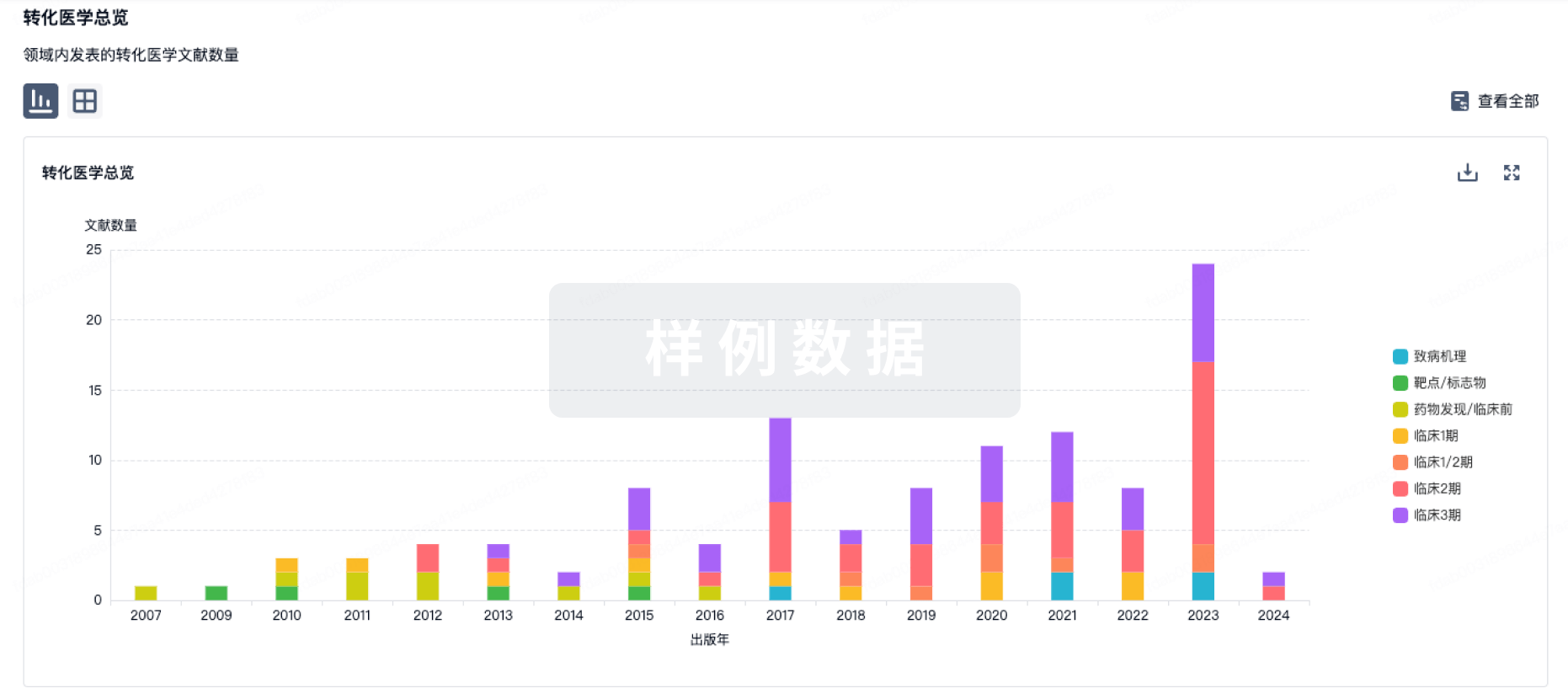
转化医学
使用我们的转化医学数据加速您的研究。
登录
或
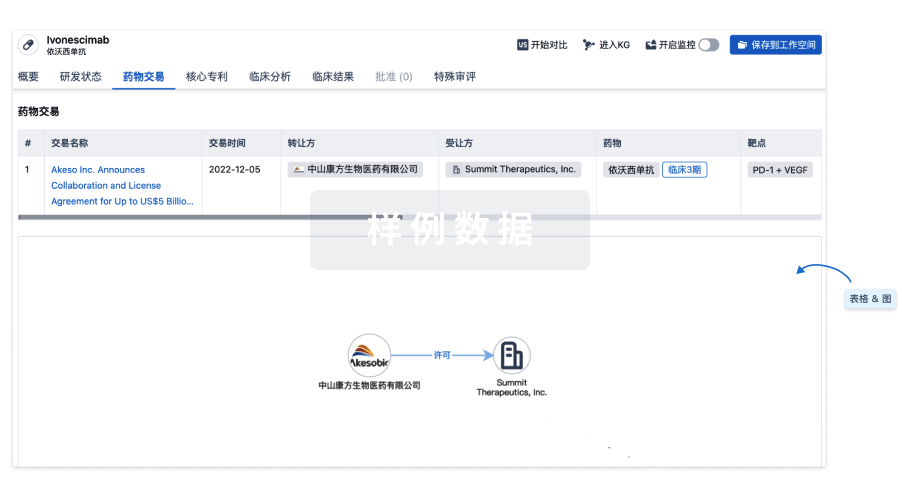
药物交易
使用我们的药物交易数据加速您的研究。
登录
或
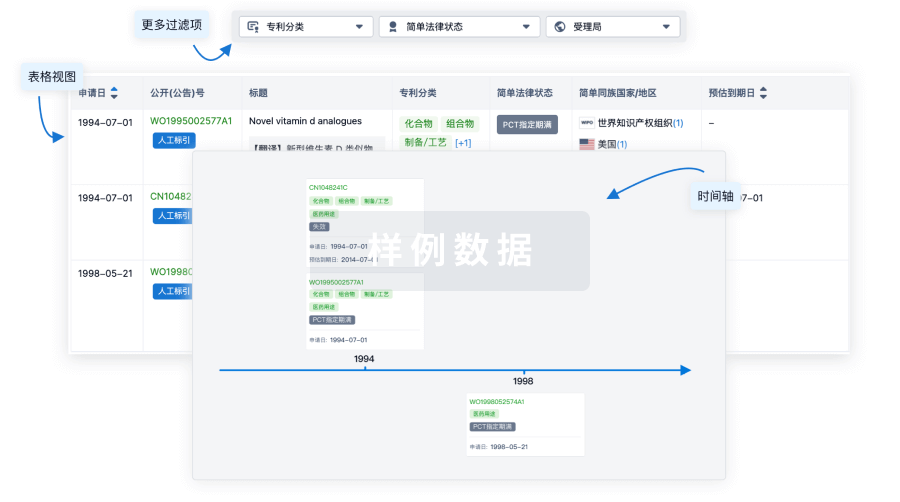
核心专利
使用我们的核心专利数据促进您的研究。
登录
或
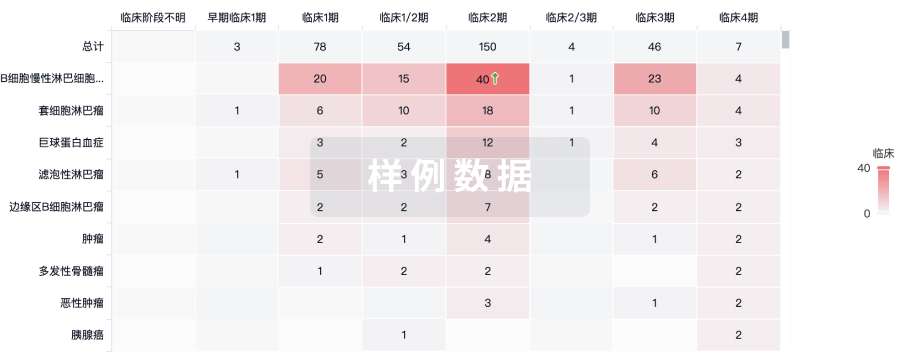
临床分析
紧跟全球注册中心的最新临床试验。
登录
或
批准
利用最新的监管批准信息加速您的研究。
登录
或
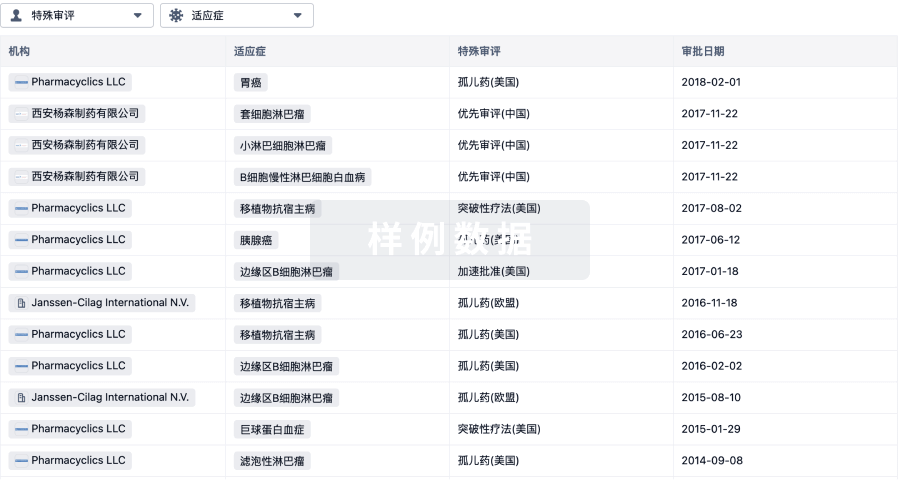
特殊审评
只需点击几下即可了解关键药物信息。
登录
或
提出任何生物医药研究问题
让每一步生物医药决策都精准制胜
基于十亿级生物数据与全球情报的精准 AI,赋能早期药物发现
立即开始免费试用!
智慧芽新药情报库是智慧芽专为生命科学人士构建的基于AI的创新药情报平台,助您全方位提升您的研发与决策效率。
立即接入生物医药数据包
智慧芽新药库数据也通过智慧芽开放平台,以MCP或API服务形式对外开放。立即使用我们的MCP服务定制您的LLM智能体。
生物序列数据库
生物药研发创新
免费使用
化学结构数据库
小分子化药研发创新
免费使用